Divertini
Designing a companion app concept that extends Divertini’s AR solution to reduce anxiety and create a calmer healthcare experience for children.
- (duration)
- 3 months
- (my role)
- UX / Product Strategist
- (scope)
- Research, concept design, UX strategy, interaction design
- (focus)
- Pediatric healthcare, emotional experience, AR
(project context)
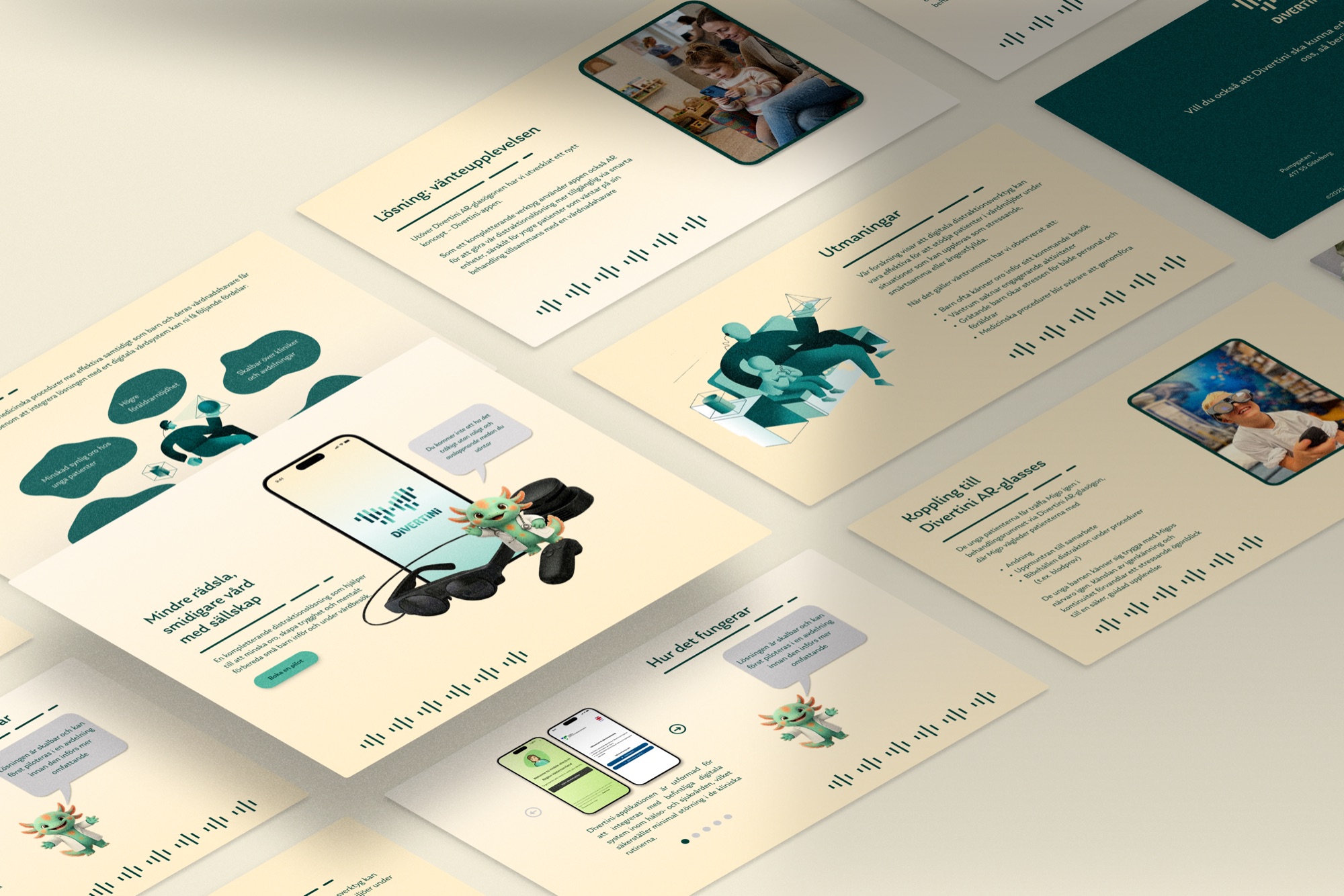
What is Divertini?
Divertini is an AR-based distraction solution designed to reduce fear and anxiety in healthcare.
Currently, children can briefly interact with an animated character through games in AR glasses during medical procedures.
(challenges)
Why it wasn’t yet standard
Although Divertini has proven effective during procedures, several challenges prevent it from becoming a standardized solution:
- The product lacks emotional continuity and cohesive storytelling.
- Hospitals still rely on traditional physical distraction methods.
- The high cost barrier limits scalability.
(user insights)
Anxiety starts in the waiting room
Our research with caretakers of children aged 0-6 revealed that anxiety already builds up before the procedure, especially during waiting time:
- Waiting areas lack structured engagement.
- AR support is only available during the procedure.
- Parents and staff feel more stress when children are already nervous.
As a result, procedures become harder to perform.
(solving the problem)
Meet Migo
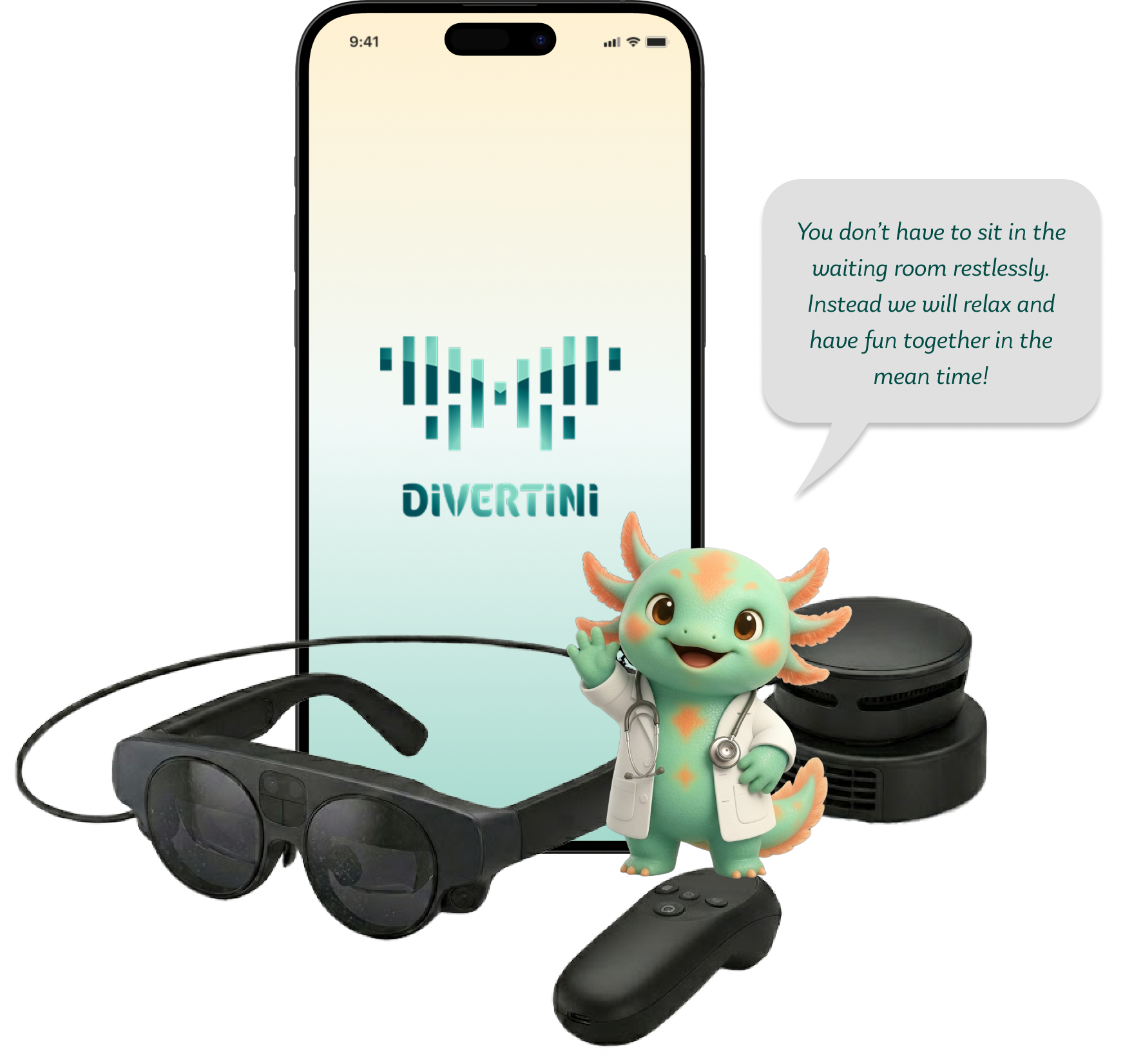
The most effective solution my team and I came forward with was to engage users right in the waiting room, with a companion app extending Divertini’s AR experience beyond the treatment room.
Children meet Migo, a trustworthy companion who offers distracting activities and prepares them through a game about basic procedures in a medical room. In order to create such a character, we organized an ideation workshop to gather ideas for Migo, which later became input for a detailed prompt for Gemini to generate this character.
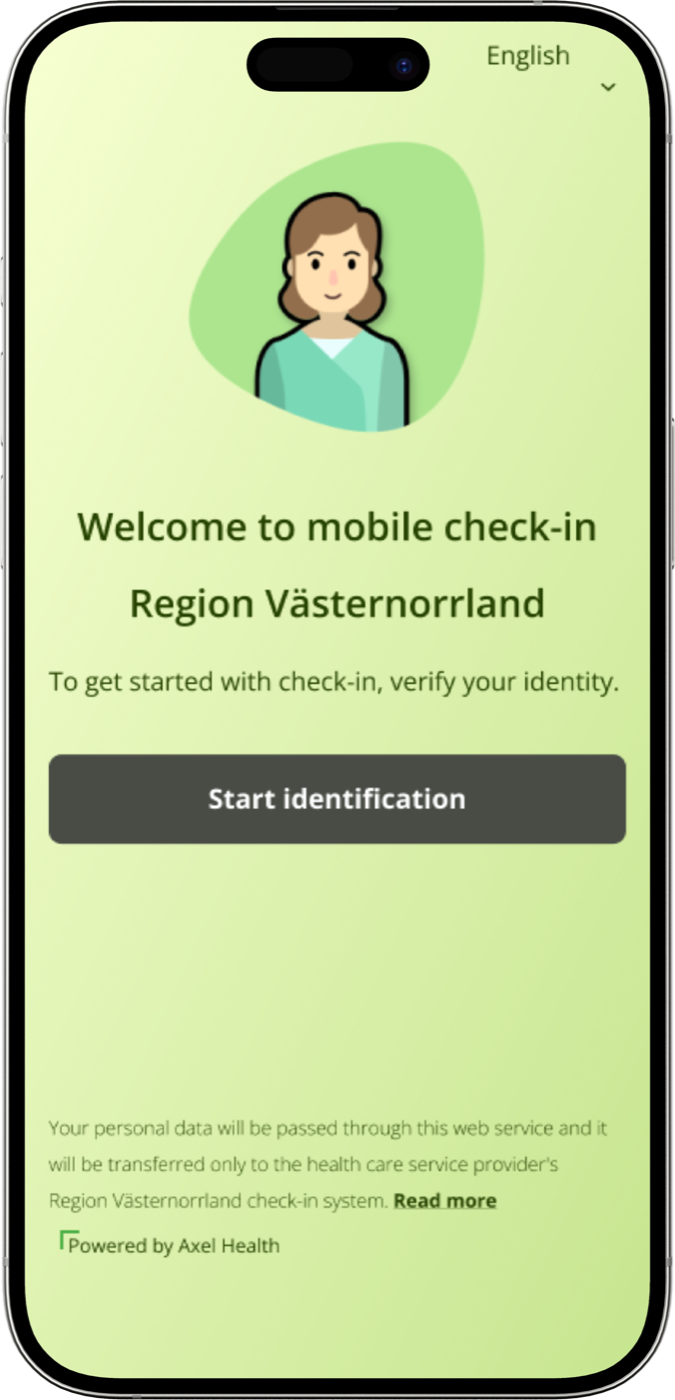
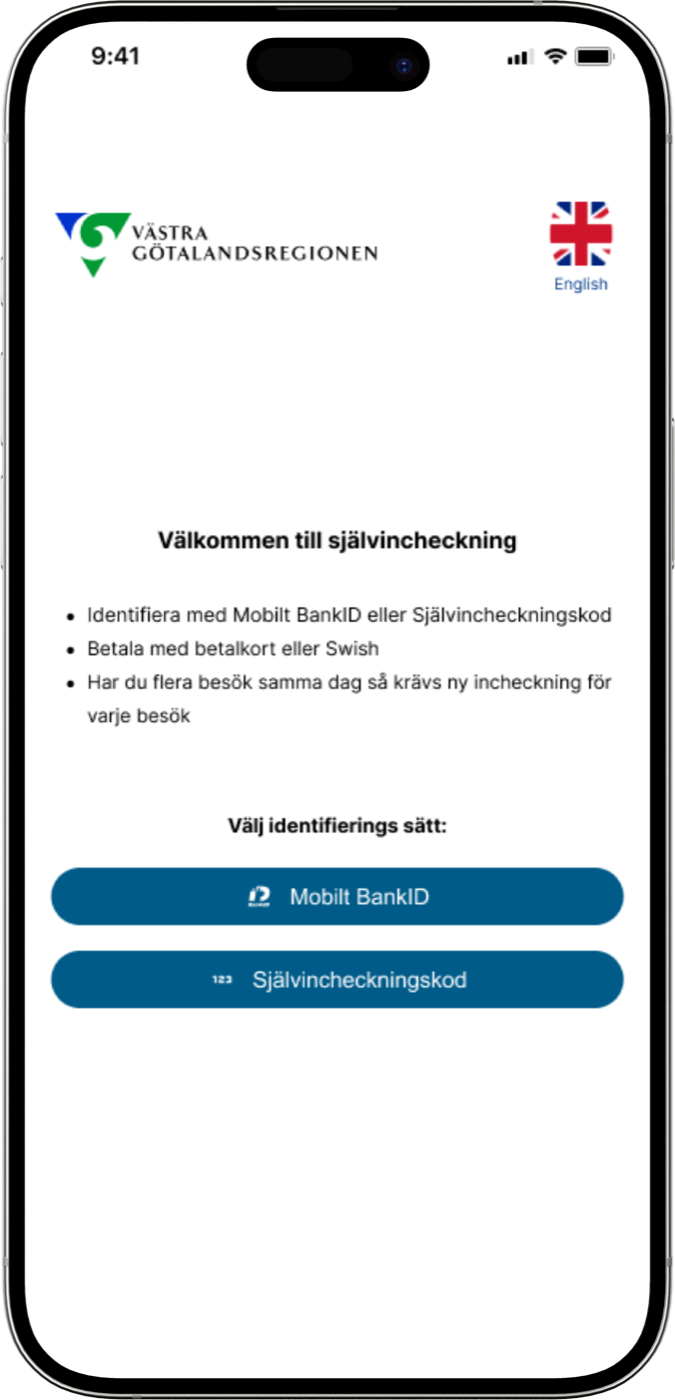
The app is designed to integrate with existing healthcare digital systems, ensuring minimal disruption to clinical routines. 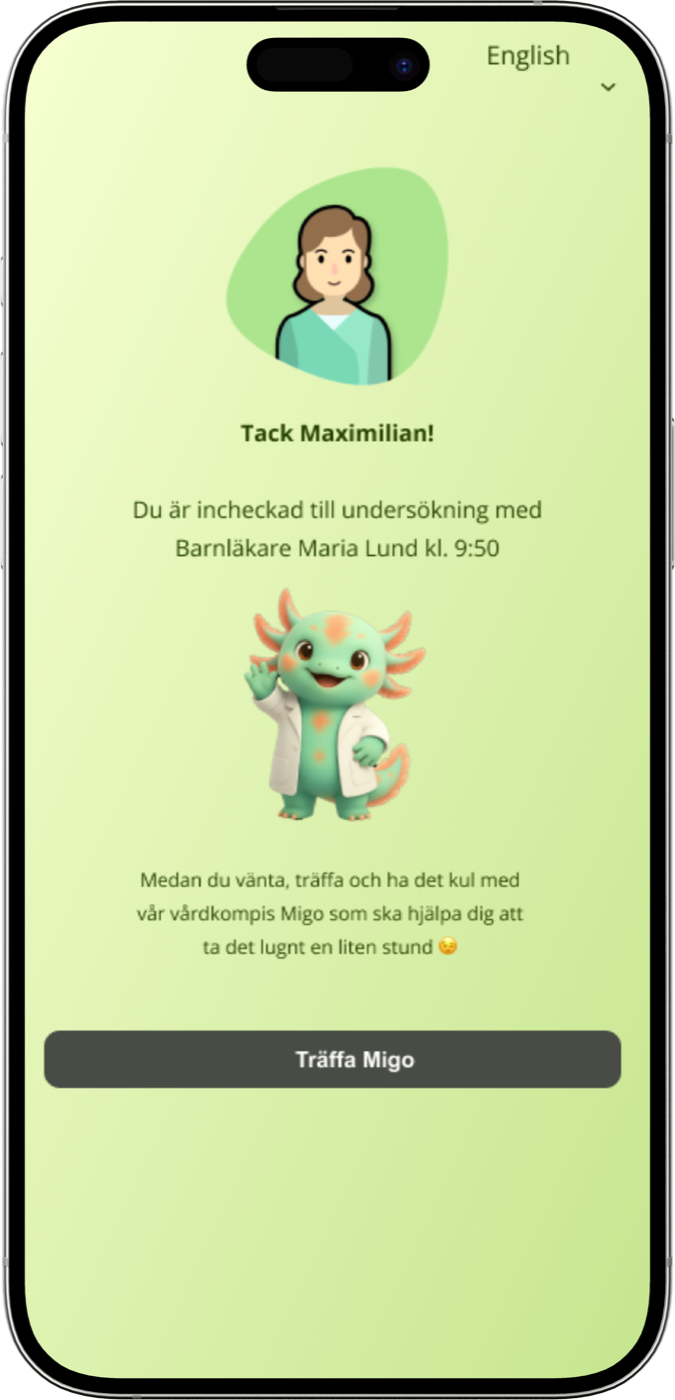
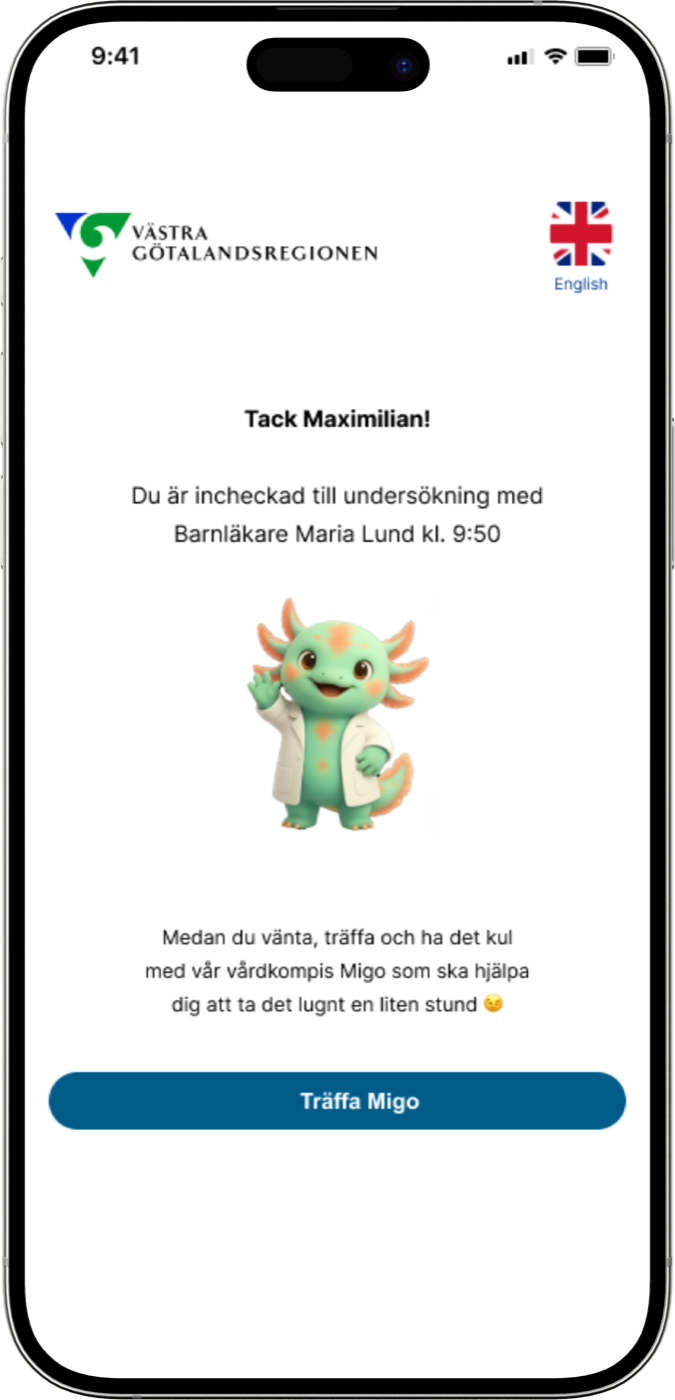
Once a young patient checks in through the provider's digital system, the platform can trigger a notification and initiate the companion experience during the waiting period. 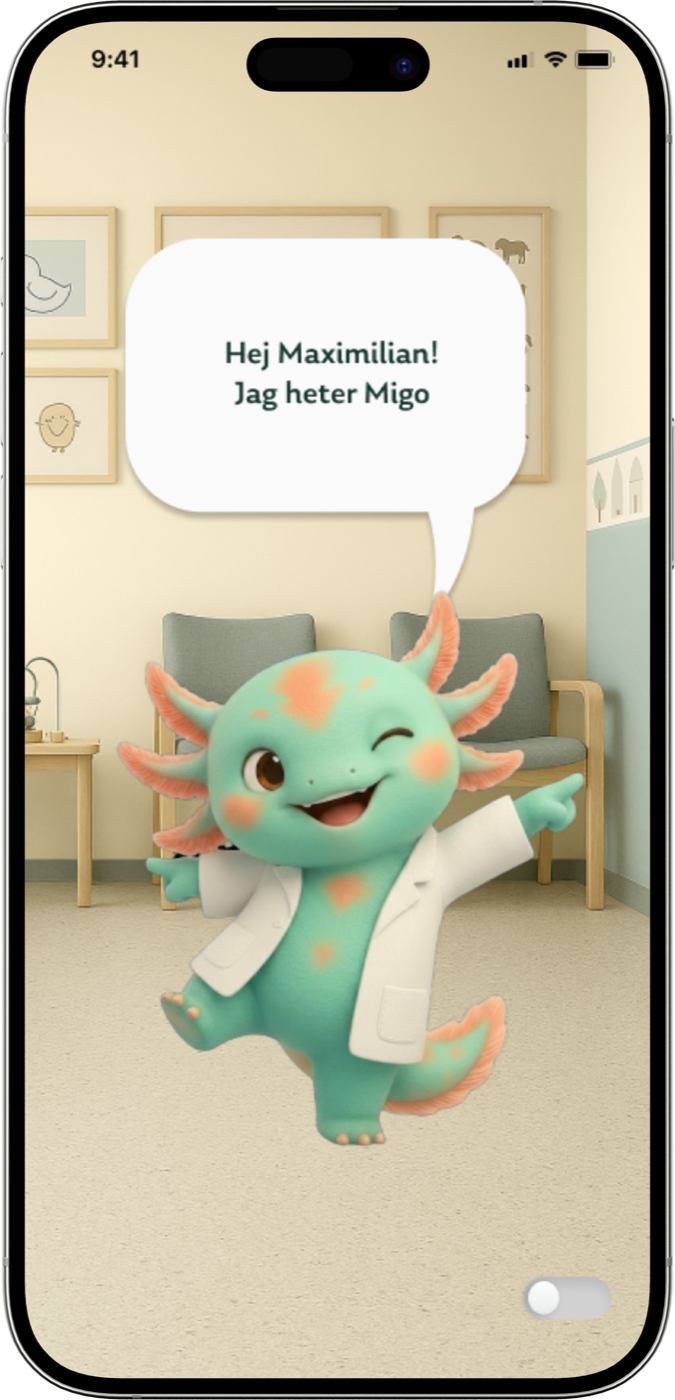
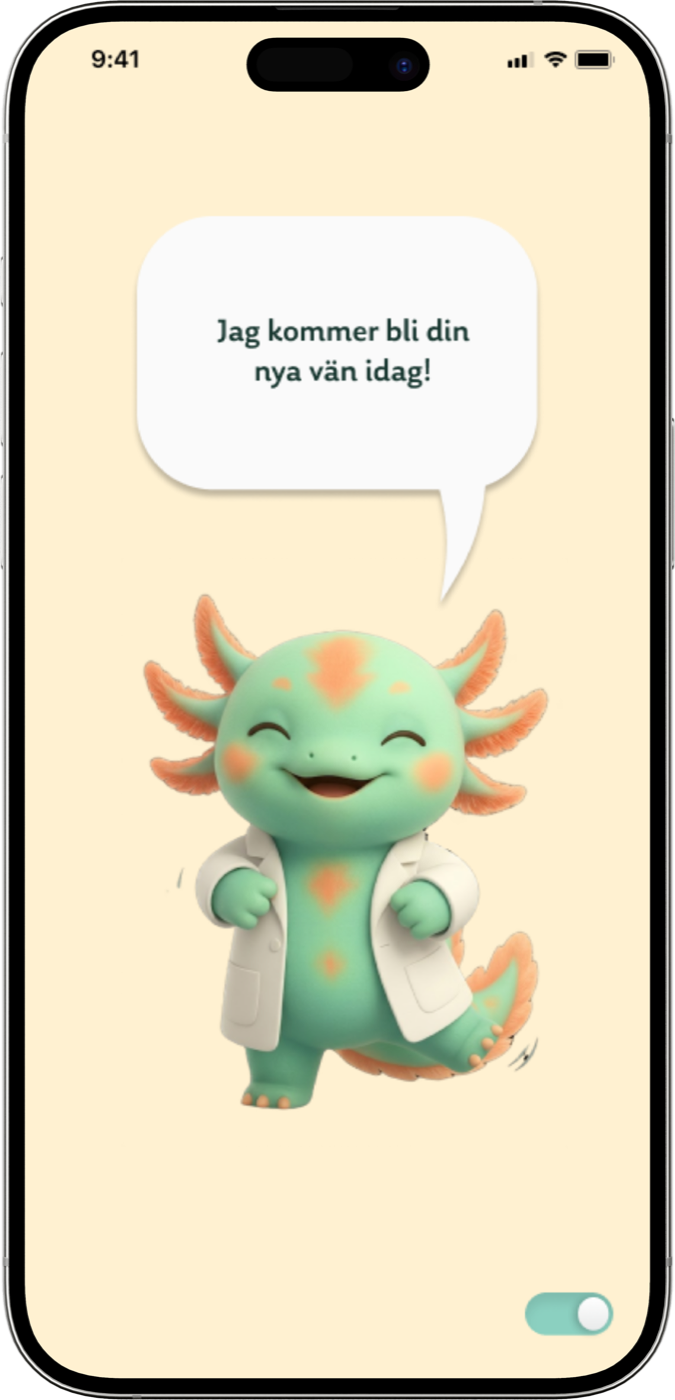
The young patients are greeted by character Migo in AR background (optional) as a trustworthy companion that forms an emotional bond with them. 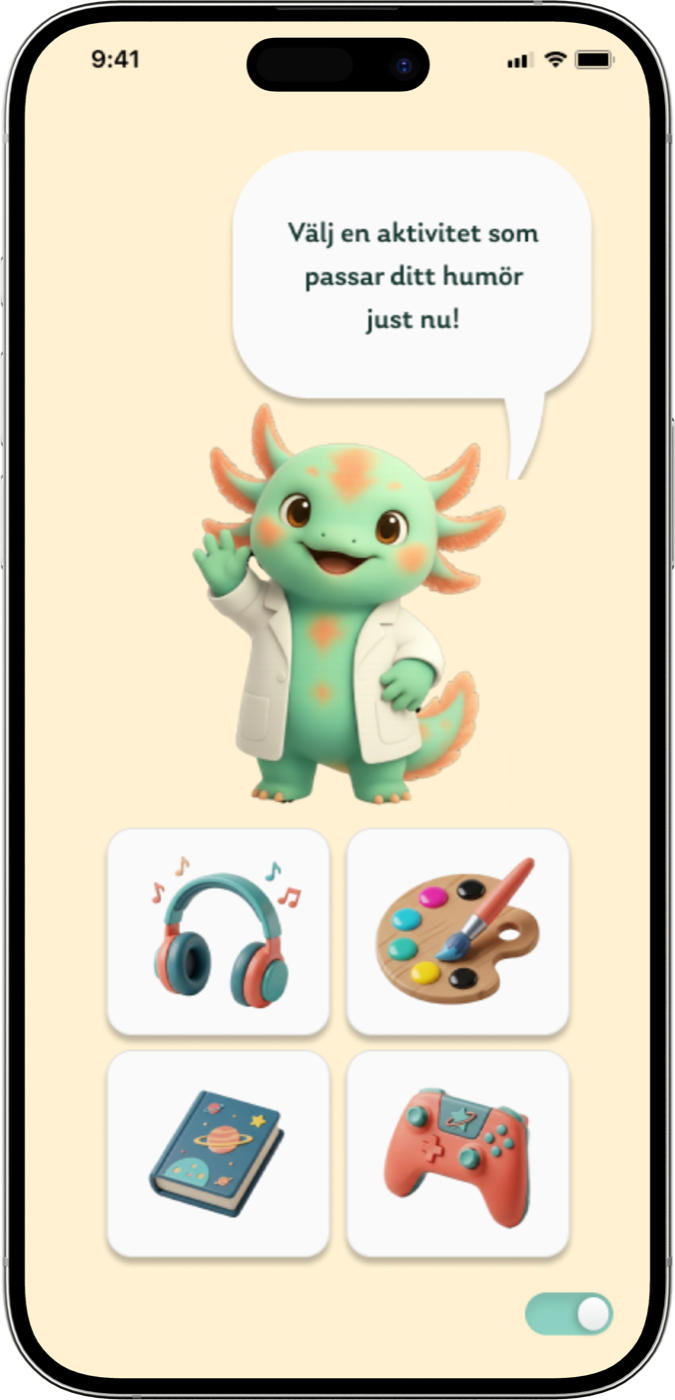
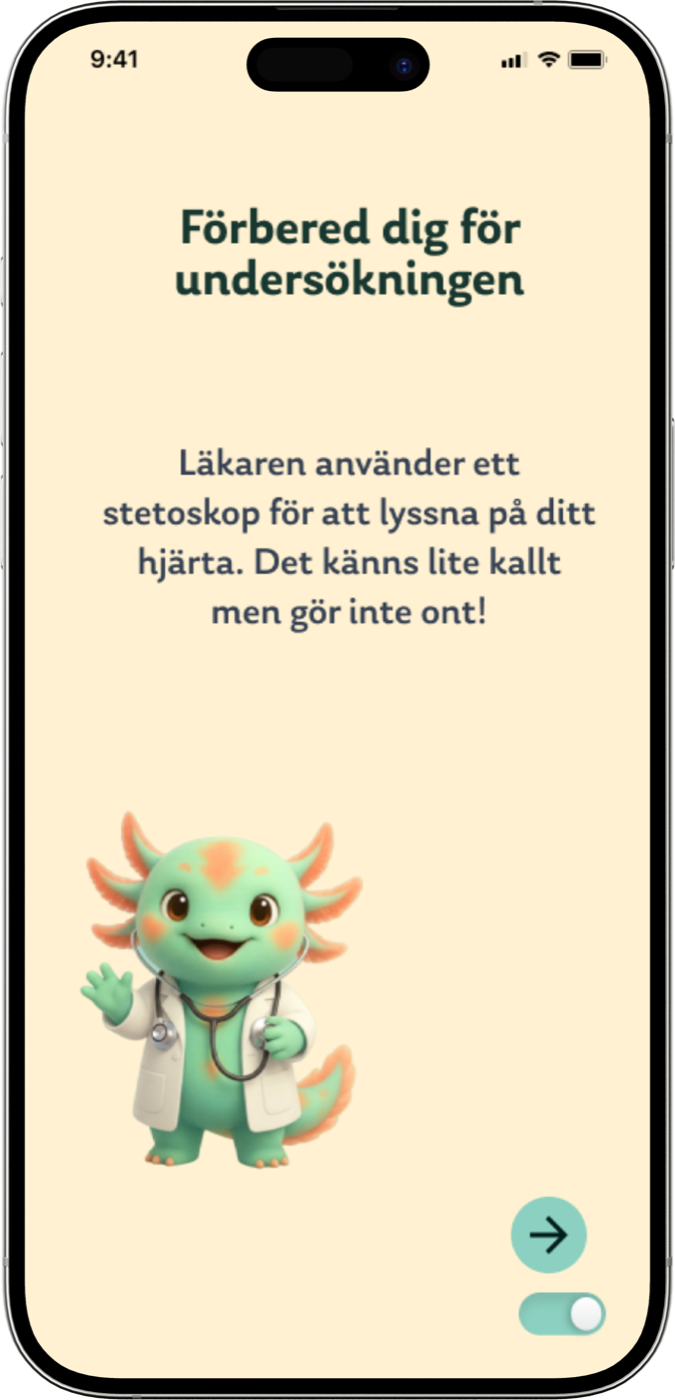
Migo offers a variety of distracting activities in the application, while at the same time mentally prepares for the patients through informative game, where they learn basic procedures in a medical room.
(connection with AR glasses)
Continuity is comfort
Our ideas also suggested that when going to the treatment room, children get to meet Migo again through AR glasses, as a digital companion who:
- Leads calming breathing exercises.
- Rewards cooperation with encouraging feedback.
- Distracts the patient during invasive procedures like injections.
This concept allows us to make a familiar character turn a frightening procedure into a predictable, safe journey for the young patients.



(try it yourself)
Six years old, and waiting for the doctor.
Step into the waiting room as a child. Meet Migo and find something that helps you feel calm before your appointment.
- Get through the intro and meet Migo
- Turn the AR background on or off
- Choose an activity: music, painting, a story or water
- Paint a picture together with Migo
(opens the interactive Figma prototype)
(visual identity)
Rooted in the brand
As a Product/UX strategist in this project, I made sure we strictly followed Divertini’s brand guidelines, palette and typography (Laca), which keeps the concept familiar and trustworthy.
- Light#8BD0C0
- Bright#FFF1D0
- Dark#005959
- Night#00201D
(result & impact)
Closer to a clinical standard
After testing the concept with children and their caregivers, followed by a presentation pitch to stakeholders from Divertini, we were confirmed that the solution could possibly scale. A mobile tier is far more cost-effective than AR glasses alone, making the experience affordable for providers.
- Reduced visible distress in young patients
- Smoother procedures and improved cooperation
- Strengthened patient-centred care branding
- Enhanced parent satisfaction
(reflection)
Key takeaways
Business-driven design
A mobile tier turned a high-cost hardware product into an easy-to-pilot solution.
Service ecosystem thinking
Designing a service, not screens: one emotional journey from waiting room to treatment room.
Pragmatic innovation
Deep empathy for vulnerable users, balanced with healthcare’s budget and technical limits.